Chinese Buyer Deducts Bank Charges or Exchange Differences: Can the Seller Claim the Shortfall?
المقالات متاحة حالياً باللغتين الإنجليزية والصينية.

A Chinese buyer says an invoice has been paid, but the foreign seller receives less after bank charges or currency conversion. The seller may have a claim for the balance, but the difference between the invoice and the bank credit is not automatically the amount legally overdue. First identify the agreed currency, who bears each charge, any accepted conversion method and how the payment was allocated.
This guide concerns a goods seller’s payment claim against a buyer in China. It does not assume that a bank made an error or that every exchange loss is the buyer’s responsibility.
1. Separate the invoice, the transfer and the actual credit
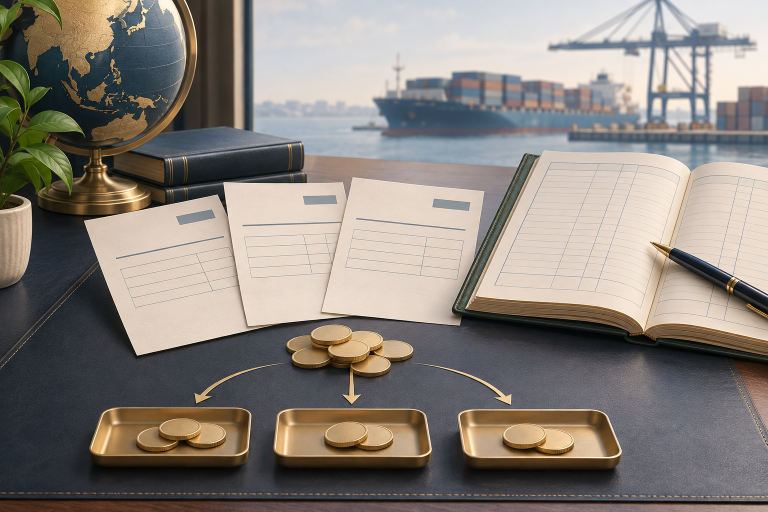
Compare three records: the amount contractually payable, the amount and currency sent, and the amount and currency actually credited. A transfer instruction alone does not establish the final credit or the discharge of the buyer’s obligation. Check whether the payment covers one invoice, several invoices or an agreed instalment, and whether there are accepted credits or price reductions.
For illustration only, an invoice for USD 10,000 and a credit of USD 9,950 show a USD 50 accounting difference. They do not by themselves establish a recoverable USD 50 debt. The answer changes if the seller agreed to bear the relevant charge, if the buyer under-remitted, or if the credited amount reflects a different currency. This is a hypothetical example, not a client result.
2. Identify who agreed to bear the bank charges
Read the signed contract, accepted order, payment instructions and any later agreement together. Separate the sending-bank fee, any intermediary deduction and the receiving-bank charge. A charge instruction entered by the buyer in a bank form is relevant evidence; it does not, by itself, prove that the seller agreed to a change in the sales contract.
If the United Nations Convention on Contracts for the International Sale of Goods (CISG) applies, Articles 53 and 54 address payment of the price and the steps or formalities needed to enable payment. Article 57 supplies default payment-place rules, including payment against handing over goods or documents, and makes the seller bear increased payment expenses caused by a post-contract change in the seller’s place of business. The contract and its interpretation under Articles 6, 8 and 9 remain important. These rules should not be reduced to a blanket statement that the buyer must reimburse every bank fee.
If PRC domestic contract law governs the issue, Civil Code Articles 509 and 510 require agreed performance and provide a sequence for resolving unclear terms. Only where the allocation remains unresolved under Article 510 does Article 511(6) allocate performance expenses to the party performing the obligation, with increases caused by the creditor borne by that creditor. Whether a particular charge is such an expense still requires examination of the payment arrangement and its cause.
3. Establish the contractual currency before claiming an exchange difference
Keep the contract currency distinct from the currency used by the buyer’s bank and the seller’s reporting currency. If an alternative payment currency was accepted, identify the agreed rate source, conversion date and rounding method. Preserve the messages or amendment that authorised that alternative. A buyer’s increased domestic-currency cost does not, without an applicable basis, rewrite a fixed foreign-currency price.
Conversely, if the agreed currency and amount were properly paid and the seller later chose to convert the funds, an unfavourable conversion does not automatically create an unpaid-price claim against the buyer. A claim for exchange loss caused by delay is a separate question requiring its own contractual or legal basis, causal evidence and loss calculation. Avoid adding the same difference both to principal and to damages.
4. Prepare a reconciliation that the buyer can check
| Record | What it should establish |
|---|---|
| Contract, accepted order and invoices | Price, currency, due date, charge allocation and any accepted credits. |
| Transfer confirmation and credit advice | Gross amount sent, actual credit date, net amount received, currency and separately identified fees. |
| Conversion agreement and bank record | Authority to pay in another currency, agreed rate method and the conversion actually applied. |
| Invoice-by-invoice ledger | Allocation of each receipt, disputed deductions and the remaining amount claimed, without double counting. |
Ask the buyer to identify the specific fee, term or conversion calculation said to justify the deduction. If the records conflict, obtain clarification from the relevant bank through the account holder. Do not invent a fee amount from a bank’s general tariff or infer the destination of money from a screenshot alone. A targeted reconciliation request may resolve a small discrepancy before a formal demand or proceedings become proportionate.
5. Separate the price balance from interest and other losses
Where PRC domestic law applies, Civil Code Article 579 provides a route to request payment of an unpaid monetary obligation. Where the CISG applies and a sum is in arrears, Article 78 provides for interest but does not set a numerical rate. Further damages under Article 74 require proof of loss caused by the breach within its foreseeability limit. First establish whether a balance is legally unpaid, then assess the relevant due dates and available remedies.
Use the interest and late-payment loss guide for the calculation issues. If the buyer proposes instalments, the instalment-payment guide explains the matters to document. The guide to payment defaults by Chinese buyers addresses the broader recovery route. A sales claim against the buyer and any claim about bank services involve different obligations; one should not be assumed to establish the other.
6. What to send for an initial China payment-dispute enquiry
Start with the parties’ company names for a conflict check, the invoice currency and amount, the actual receipt and disputed difference, the agreed due date, and the outcome sought. Explain whether the dispute concerns a fee, an exchange calculation, an invoice allocation or a refusal to pay. Describe which contract and bank records are available; detailed documents can be requested after the appropriate communication arrangements are confirmed.
Depending on the documents, a review can address reconciliation, a payment demand, settlement terms, the dispute-resolution clause and the practicality of recovery in China. The service scope and fees are confirmed before engagement. No recovery amount, timing or result is promised. See cross-border trade dispute services, contact Lawyer Pan, or email panjianxing46@gmail.com.
Sources and applicability, checked 13 November 2026: official CISG text in the British Columbia legislative schedule (Articles 1, 6, 8, 9, 53, 54, 57, 74 and 78); UNCITRAL status table; and the Supreme People’s Court publication of the PRC Civil Code (Articles 509–511, 579 and 1260). The CISG entered into force for China on 1 January 1988; China has an Article 1(1)(b) reservation. Its application requires examination of the parties’ places of business, relevant declarations, the transaction and any exclusion. The Civil Code took effect on 1 January 2021; its rules are not automatically added to a CISG-governed issue. The Canadian source supplies the treaty text, not a choice of Canadian law. English descriptions of the Civil Code here are explanatory, not an official translation.
Cover: AI-generated conceptual illustration, not a real client or case photograph. This article provides general information; a particular claim requires document-specific analysis.
Author: Jianxing Pan
Partner, Beijing ChangAn Law Firm; working in Beijing and Shenzhen.