Chinese Supplier Refuses to Return Your Moulds: Ownership, Liens and Handover
مقالات در حال حاضر به زبانهای انگلیسی و چینی در دسترساند.
A Chinese supplier’s refusal to release production moulds can interrupt a buyer’s move to another factory. Paying a tooling charge does not, by itself, resolve who owns the moulds or whether the holder can lawfully retain them. Separate ownership, the right to possession, the debt being asserted and the practical handover arrangements before demanding immediate release.
This guide concerns commercial buyers seeking the return of physical moulds or tooling located in mainland China. It does not assume that every manufacturing arrangement is a sale or that owning a mould also establishes ownership of the drawings or intellectual property used with it.
1. Identify the moulds, their owner and the actual holder
Match each item to a tooling order, drawing revision, serial number or other reliable identifier. Keep photographs, acceptance records, the tooling invoice, payment evidence and the supplier’s written acknowledgment of ownership or custody. A general payment for development, setup or use may differ from a purchase of the physical tooling.
Read when ownership was intended to pass and what delivery or custody arrangement was agreed. If the mould remained at the factory, record the legal basis on which the factory was holding it for the buyer. A contract label or a payment receipt alone may leave important questions unresolved.
Establish whether the mould is held by the contracting seller, a separate toolmaker, a subcontract factory or a warehouse. Ask for its location and condition without assuming that companies sharing a brand or salesperson are the same legal person. The entity that promised to arrange release and the entity physically holding the item may require different claims.
2. Separate the return obligation from the applicable property law
Review the tooling agreement and supply contract for return triggers, permitted use, storage, maintenance, relocation, subcontracting and dispute resolution. Ending a purchase order does not necessarily answer all of those questions. A sale dispute, a tooling manufacture arrangement and a custody relationship may need separate legal analysis.
In a Chinese conflict-of-laws analysis, Article 37 of the Law on the Application of Laws to Foreign-Related Civil Relations permits an agreed choice of law for movable property rights; absent a choice, it points to the law where the property was located when the relevant legal facts occurred. Article 41 separately addresses contract governing law. Do not assume that a foreign-law sales clause necessarily resolves every property or third-party possession issue.
Where Chinese domestic property law applies, Civil Code Article 235 allows the rights holder to seek return from a person possessing property without a right to do so. The buyer must establish the relevant right and examine the holder’s asserted basis for continued possession. Ownership evidence is essential, but a valid lien or other lawful basis cannot simply be ignored.
3. Check the asserted lien against the debt and the contracts
Civil Code Article 447 addresses a creditor lawfully possessing a debtor’s movable property where a due debt remains unpaid. Article 448 normally requires the retained property and debt to arise from the same legal relationship, with an exception for retention between enterprises. Article 449 excludes property that the law or the parties’ agreement prohibits from being retained. An ownership clause and an effective no-lien clause serve different purposes.
Ask the holder to identify the creditor, debtor, invoice, amount, due date and legal basis. Separate unpaid tooling manufacture costs from disputed goods invoices, storage charges and a different company’s debt. Neither saying “the invoice is disputed” nor saying “there is an unpaid balance” settles whether the retention is lawful.
If the applicable arrangement is a Chinese-law contract for work, Article 783 addresses retention of the completed work results, or refusal to deliver them, for unpaid remuneration or material charges, subject to contrary agreement. A newly manufactured mould that is itself the work result is different from an existing buyer-owned tool supplied to make other goods; Article 783 should not be applied to every item in the factory indiscriminately.
A subcontractor’s lien needs particular care. Article 62 of the Supreme People’s Court’s security-system interpretation supports, subject to its conditions, retention of lawfully possessed third-party movables arising from the same legal relationship where a due debt is unpaid. Third-party ownership alone is therefore not a complete answer. Conversely, for enterprise retention involving a different legal relationship, the interpretation supports return of third-party property; it also limits that exception by reference to debts arising in continuing business operations. Map the actual relationships before deciding whether the foreign buyer’s mould can be retained for the seller’s debt.
4. Preserve the item and negotiate a documented handover
Request a dated inventory, photographs, current location and an explanation of any proposed movement or disposal. Set out the buyer’s claimed ownership and return basis, identify the disputed debt separately, and propose a workable release arrangement. Avoid an unqualified admission of the entire balance merely to obtain access.
Possible negotiated terms include payment of an agreed undisputed sum, a separately agreed security arrangement, and simultaneous collection. Under Article 457, a lien is extinguished when the lienholder loses possession or accepts alternative security provided by the debtor; simply offering security does not establish acceptance. Record exactly what has been accepted and which claims remain disputed.
A lien does not automatically make the creditor the owner or permit immediate disposal. Articles 450 and 451 address the value of divisible retained property and proper care. Article 453 governs the post-retention performance period and realisation: where no period is agreed or the agreement is unclear, at least 60 days is generally required, with the statutory exception for fresh, perishable or similarly difficult-to-preserve movables. Do not confuse that rule with a guaranteed 60-day resolution of the buyer’s dispute.
| Handover issue | What to record |
|---|---|
| Items and condition | Identifiers, components, photographs, wear, damage and missing parts. |
| Authority and receipt | The releasing entity, authorised collector, recipient factory and signed collection record. |
| Payment and reservation | The exact sum, purpose, any accepted security, release conditions and claims expressly left open. |
| Movement and information | Packing, transport, insurance and any export requirements; separately specify drawings, copies and permitted use. |
5. Choose the claim before taking escalation steps
If release cannot be agreed, assess the contractual return claim, any property-return claim, the correct parties and the applicable court or arbitration route. A demand to a trading company may not by itself recover a mould held elsewhere. Review whether an interim measure is appropriate if there is evidence of threatened removal or destruction; availability, security and procedure require case-specific assessment.
Keep proof of the mould’s condition and value, replacement quotations, production interruption and reasonable steps taken to reduce loss. Lost production or replacement costs are not automatically recoverable in full. Avoid entering premises or removing tooling without lawful authority, and do not assume a civil payment dispute is established criminal misconduct.
6. Prepare a focused China tooling dispute review
For an initial enquiry, provide the legal names of the buyer, seller and current holder; the mould’s known location; the supply and tooling agreements; ownership and payment records; the amount and basis of the claimed debt; and any planned disposal or production deadline. State whether the objective is physical release, a negotiated handover, replacement or a monetary claim. A short non-sensitive summary can come first, before confidential documents are shared after conflict checking.
Legal work can be scoped around title and possession evidence, the lien defence, a release proposal and the dispute route. The work scope, fees and engagement arrangements should be confirmed before representation begins. An enquiry does not itself create an engagement or guarantee recovery.
Related guides: cancelling a custom order; supplier and subcontractor responsibilities; preserving claims in a refund settlement.
China cross-border trade dispute legal services · Contact and initial information · panjianxing46@gmail.com
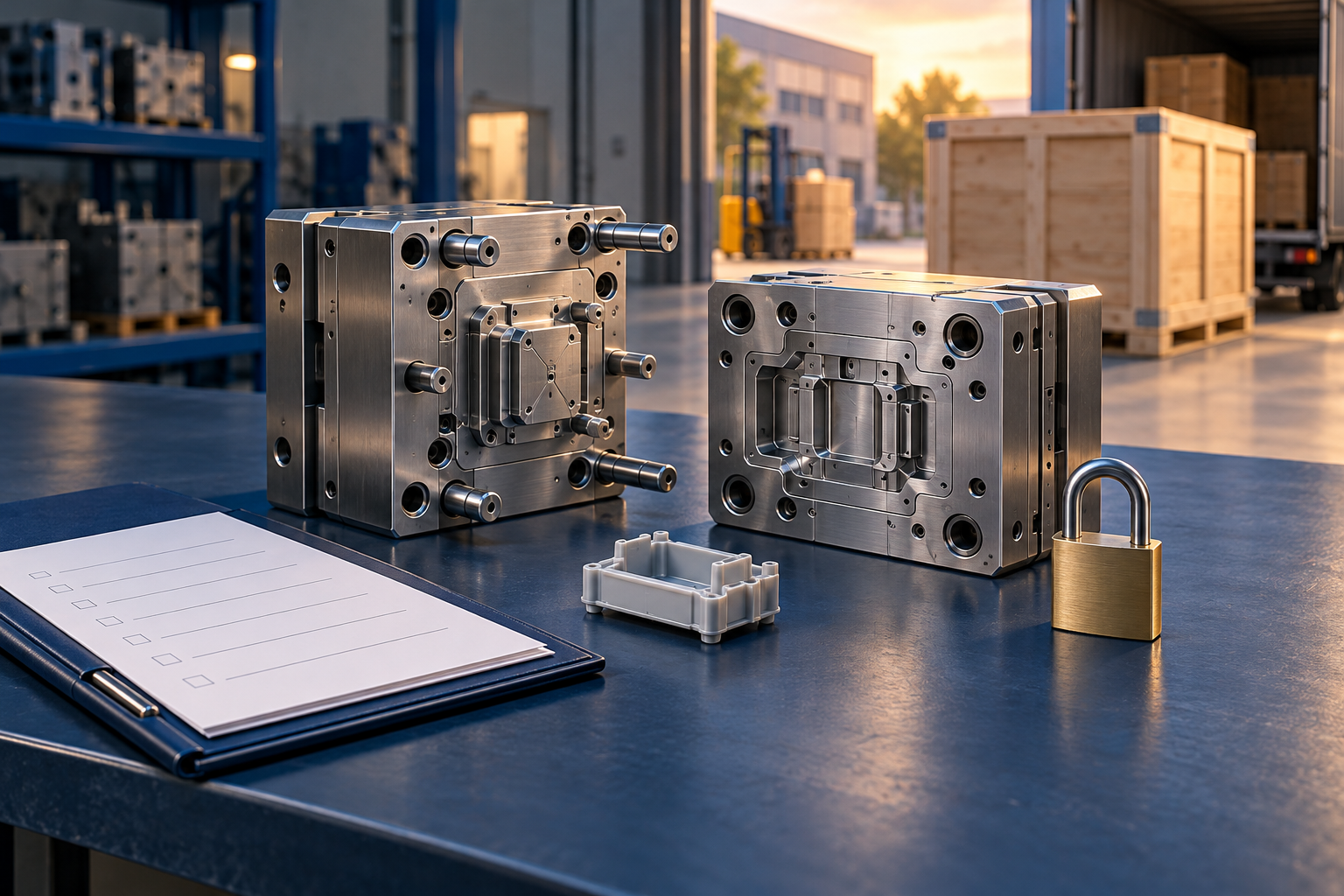
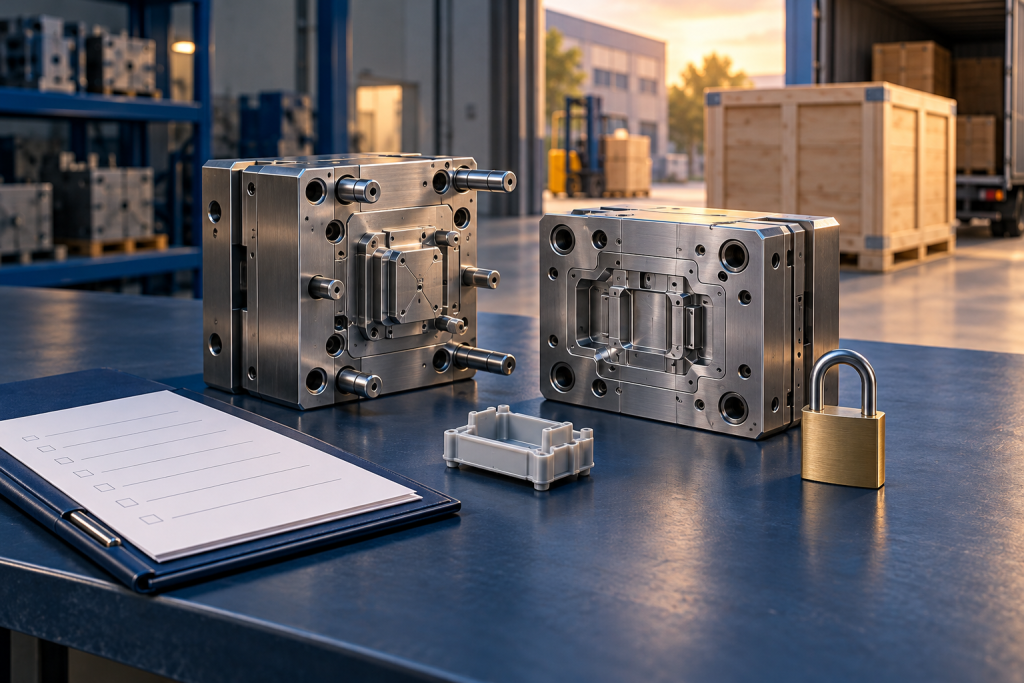
Official sources reviewed on 29 October 2026: Civil Code of the People’s Republic of China, Articles 235, 447–451, 453, 457 and 783, effective 1 January 2021; Supreme People’s Court Interpretation on the Civil Code’s Security System, Fa Shi [2020] No. 28, Article 62, effective 1 January 2021; Law on the Application of Laws to Foreign-Related Civil Relations, Articles 37, 41 and 52, effective 1 April 2011. General information, not an opinion on particular property or a particular debt. Author: Jianxing Pan, Partner, Beijing Chang’an Law Firm. Cover: AI-generated conceptual illustration, not a photograph of a client’s tooling, factory or case.